
Hardicraft and FlexiManual
Hardicraft Publishes Its Crochet and Knitting Patterns in More Than Ten Languages, With the Terminology Under Its Control
AI-assisted translation to open markets without the packaging, the terminology or the budget setting the limit.
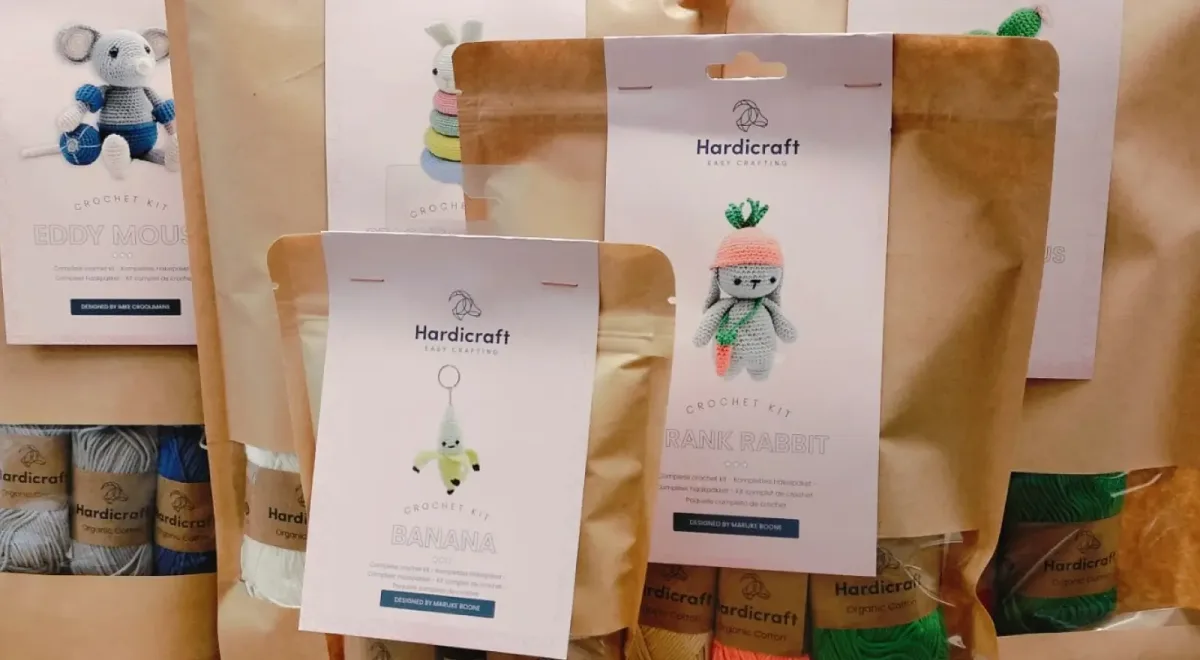
Hardicraft is a Dutch brand based in Hengelo, with roots in the textile industry of Twente, making complete crochet and knitting kits: yarn, haberdashery and pattern, in a compact pack. Its designs are its own and exclusive.
In a crochet kit, the instructions are an important part of the product. The customer is not buying a finished object, they are buying what allows them to make it. As Hardicraft sells to specialist shops and online stores across Europe, the United States and Canada, they never know which language the person opening the pack will want the pattern in.
Distribution
Before
The Size of the Leaflet Decided How Far the Brand Could Reach
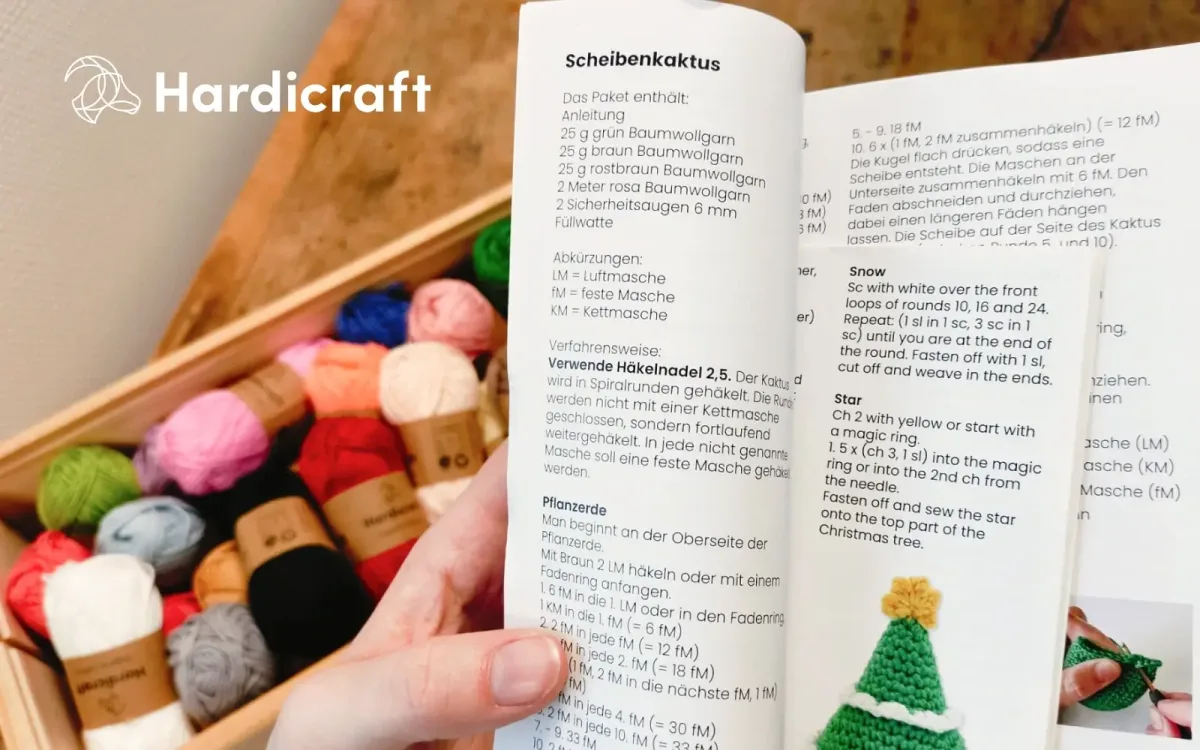
Hardicraft has always included the pattern inside the pack, in five languages, and the leaflet was full. One more language was not only a commercial decision, but a problem of physical space. A kit bought from a Dutch distributor could end up in the hands of someone crocheting in Poland, and that customer found instructions they could not read.
Offering the pattern online as well solved the space problem, but created another issue: patterns circulate easily within the crochet world, and a pattern published freely is a pattern anyone can copy without having bought the kit.
With FlexiManual
The Packaging No Longer Determines the Languages
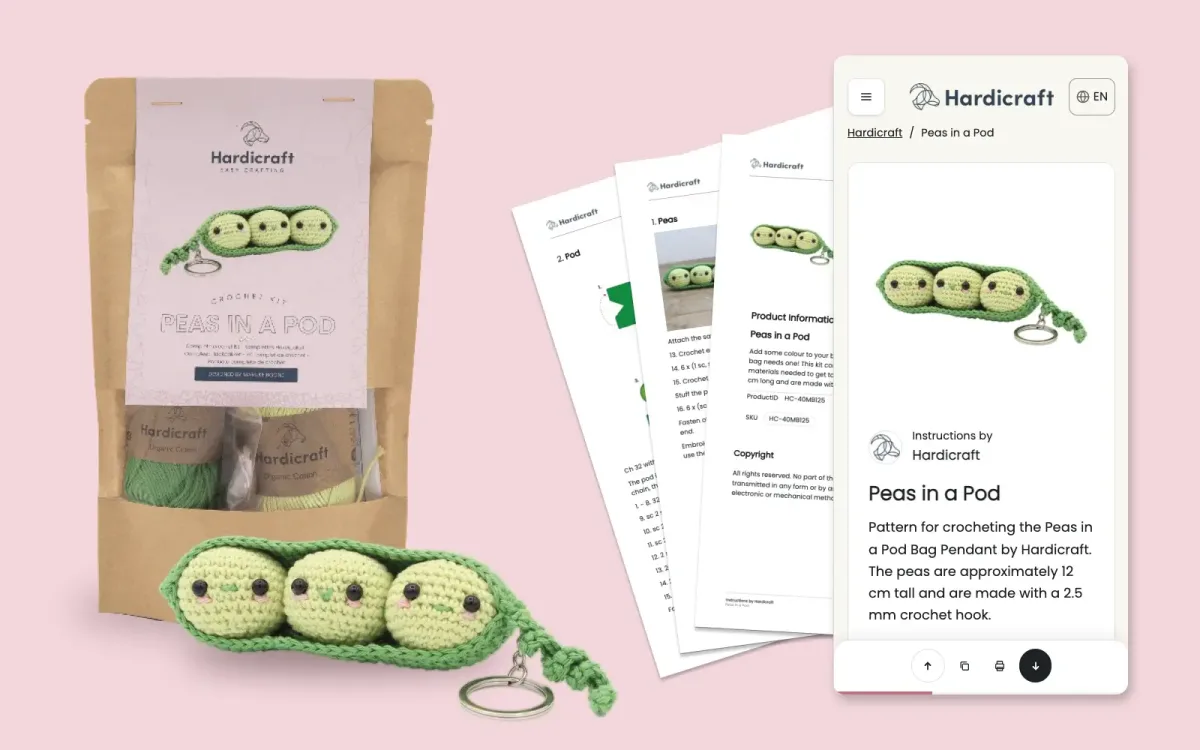
FlexiManual has enabled Hardicraft to expand the offered languages. The patterns are now also available online and the customer gains access through a QR code. Access to that QR code is protected, so the Hardicraft team can decide which patterns stay open for promotional purposes and which are reserved for real customers.
Hardicraft went beyond ten languages without redesigning the packaging, and keeps adding more. When a market asks for a new language, its translators build the glossary and check the result, and FlexiManual applies that terminology across the whole catalogue. Online, each pattern can also carry extra photos and explanations that would never fit on paper.
Translation
Before
A Badly Translated Pattern Is a Product That Does Not Work
One mistranslated number or one inconsistent abbreviation ruins weeks of work. Four of the five main reasons for poor reviews in this category come down to the quality of the instructions, so translating is not localising a text, it is making the product in another language.
A pattern reads like a musical score. Each language has its own notation and abbreviation conventions, so a literal translation never works: the pattern has to be rewritten in the convention that its community of knitters and crocheters recognises. For example, two opposite stitches can be written with the same letter in two different languages, so an error of judgement does not produce odd text, it produces the wrong end product.
Their team maintained that rigour pattern by pattern and translation by translation. It worked, but was slow to scale, since every new language multiplied the review work across the whole catalogue.
With FlexiManual
Hardicraft Translation Rules, Written Once and Applied in Every Language
FlexiManual allows Hardicraft to define its own terminology for each language and then the platform applies it across every pattern. The rigour with which their team and translators reviewed each translation is exactly what defined those rules: by writing them down, their judgement stopped residing in the memory of whoever was translating and became available to the whole team and to every new language.
Translations do sometimes need exceptions to the established rules, to fit the case in hand. Those nuances are what have refined the system. The rules now reach every language at once, and the team spends its time where judgement is needed.
When their patterns need the eye of a native knitter or crocheter, they invite an external collaborator to work on the same document, with access to their language only and without the pattern leaving the platform.
And a pattern is not closed once it is published: the community makes the pieces, spots issues and sends in its comments. A correction is applied once and can reach every language the same day.
Also
A Document Meant to Be Printed at Home
Many Hardicraft customers would rather not have a screen in front of them while they are knitting or crocheting. FlexiManual makes sure that, when the pattern is printed from the browser, it produces a clear and legible document, with a font size that can be easily read.
The outcome
For Hardicraft, opening a new market has become a commercial decision, rather than a constraint of how many languages fit in a leaflet. The team stopped administering an archive of documents and turned to what sets the brand apart, the technical rigour of its patterns.
When the instructions are an important part of the product, their quality and their language coverage determine how far the brand can go.
“For us, translating the pattern is making the product for that market. That's why some countries were simply out of reach. Now a distributor asks for their language and we have it ready for the conversation.”